 How-to
Working for a Supportive Delivery Team: What to Expect
Last Updated: November 2, 2026
Quick Summary
A supportive delivery team is one where drivers can ask for help without being judged, shown through daily check-ins, a named contact during shifts, and clear steps for reporting problems. Before accepting a role, ask for the actual hourly rate, when benefits begin, and whether training is paid.
- Look for a short pre-shift huddle covering weather, road closures, and route priorities.
- Ask for the starting hourly rate, how overtime is calculated, and when benefits begin.
- Confirm training shifts are paid and ask who signs off that you are ready to drive solo.
- Ask whether breaks, lifting guidance, and safety rules are written down.
- Check that the escalation path for urgent issues is named and written down.
Table of Contents
- What a Supportive Delivery Team Looks Like Day to Day
- Pay, Benefits and Stability: Separating Real Numbers From Marketing Language
- Training Before You Hit the Road
- Safety Practices That Protect Drivers From Burnout and Injury
- How Communication Works Between Dispatch, Drivers and Managers
- What a Delivery Coordinator Does for Your Team
- Deciding Whether a Supportive Delivery Team Fits You
- Frequently Asked Questions
What a Supportive Delivery Team Looks Like Day to Day
A supportive delivery team is one where drivers feel they can ask for help without being judged. Most of the difference shows up in small daily moments: a dispatcher who answers the phone, a lead who checks in before the route starts, and a coworker who helps you load the van when the first stop is heavy.
Many new drivers find that the first week sets the tone. Supportive teams tend to hold short daily check-ins, share route notes, and make it easy to report problems early.
Here is what that usually looks like in practice:
- A short pre-shift huddle that covers weather, road closures, and route priorities
- A named contact for questions during the shift
- Clear steps for reporting a missed package or a vehicle issue
- Coworkers who swap tips on tricky addresses and gate codes
- A debrief at the end of the day that focuses on what went well
Watch out: A team can look friendly on paper and still leave new drivers alone on their first route. Ask who you call when a package will not scan, and ask how long the answer usually takes.
Pay, Benefits and Stability: Separating Real Numbers From Marketing Language
"Competitive pay" means little on its own. Before you accept a role, ask for the actual hourly rate, how overtime is calculated, and when benefits begin.
Good questions to ask include:
- What is the starting hourly rate, and when is the next review?
- How many hours per week are guaranteed, if any?
- When does health coverage start, and what does it cost the employee?
- How is paid training handled, and is it paid from day one?
Stability matters as much as the rate. A higher hourly figure means little if your hours can drop without notice. Ask how schedules are set and how far in advance they are posted.
Training Before You Hit the Road
Training is where a supportive team proves itself. A new driver should learn the vehicle, the scanner, the route software, and safe loading practices before running a full route alone.
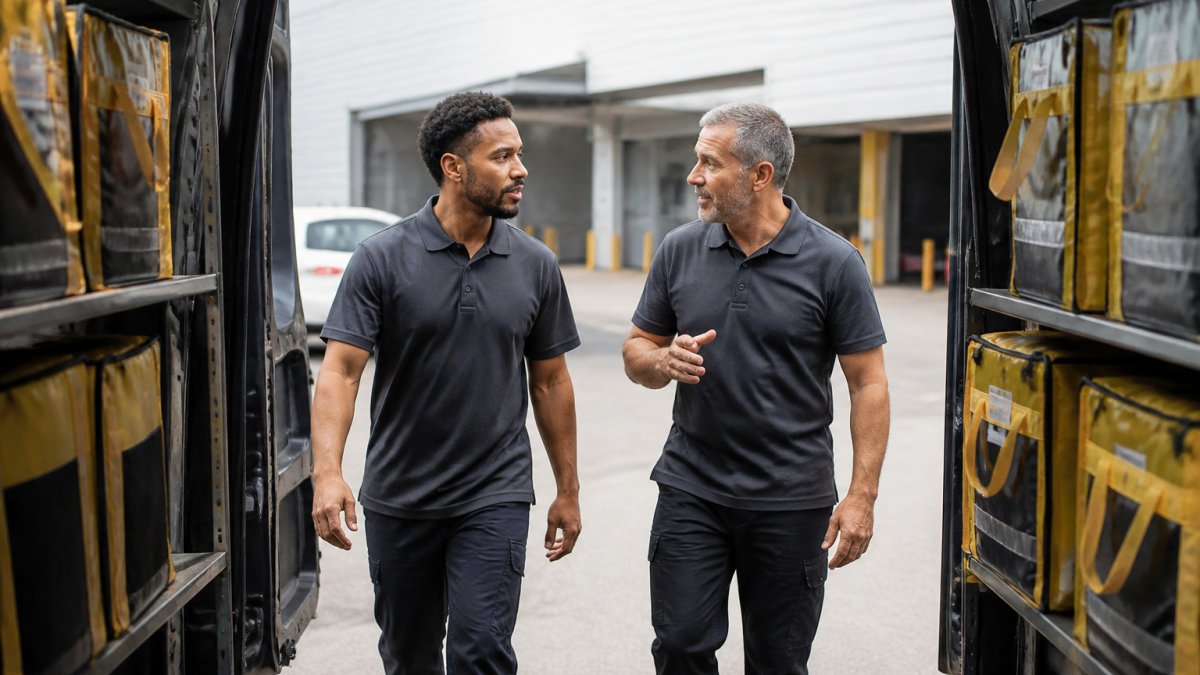
We recommend asking three things before you start:
- How many training shifts are paid?
- Who signs off that you are ready to drive solo?
- What happens if you need extra practice?
A strong program also gives you a written checklist. That way you know what you are expected to learn and when. Ask to see it before your first day, if the team cannot produce one, that is a signal the training is improvised rather than planned.
Watch out: Training that consists only of a video and a set of keys is a warning sign.
Before your first solo route, these are the training questions a supportive team should be able to answer.
| Question to ask | What to look for | Why it matters |
|---|---|---|
| How many training shifts are paid? | Paid training | Shows the team values your time |
| Who signs off that you are ready? | A named person | Clear accountability before solo driving |
| What if you need extra practice? | A stated process | Prevents being left unprepared |
| Is there a written checklist? | Available before day one | Shows planned, not improvised, training |
| Is the trainer a dedicated role? | Dedicated trainer | Better teaching than a pulled-off-route driver |
Safety Practices That Protect Drivers From Burnout and Injury
Delivery work is physically demanding. Lifting, long walking distances, and repeated climbing in and out of a van add up over a week. Supportive teams plan for this instead of expecting drivers to push through it.
Practical safety habits worth asking about include:
- Lifting guidance and access to carts or dollies for heavy items
- Scheduled breaks, especially during hot or cold weather
- Clear rules for stopping a route when conditions are unsafe
- Stretching or warm-up time before the first stop
- A simple process for reporting injuries and near misses
Watch out: Drivers who never take breaks or who are pressured to skip them are at higher risk of injury and fatigue. Pay attention to how your team talks about breaks during your first week.
How Communication Works Between Dispatch, Drivers and Managers
Clear communication keeps routes moving. Supportive teams usually have one channel for urgent issues, such as a blocked access point, and another for routine updates. Drivers should know which is which from the start.
A simple routine that works well:
- Dispatch sends the route plan and any changes before the shift
- Drivers report delays or problems through the designated channel
- Managers review issues at a set time each day
- Feedback goes both ways, so drivers can suggest route fixes
Ask during your interview what the escalation path is and whether it is written down. A team that can name the tiers and the response times is a team that has thought about what happens when something goes wrong at 4 p.m. on a Friday. Clear protocols for handling pressure indicate a stable environment where employees can prioritize long-term logistics career benefits over the immediate stress of a crisis.
Ask how quickly questions get answered. A response within the same shift is a good sign. Silence for days is a warning sign.
Federal Motor Carrier Safety Administration hours-of-service and safety resources
What a Delivery Coordinator Does for Your Team
A delivery coordinator often serves as the link between drivers and management. Their job is to plan routes, track daily results, and solve problems as they come up. For drivers, a good coordinator is often the fastest route to a real answer.
Typical responsibilities include:
- Building and adjusting daily route assignments
- Tracking delivery exceptions and missed stops
- Passing driver concerns up to management
- Making sure new drivers have the tools they need
- Following up on safety reports and vehicle issues
When you interview, ask who your coordinator would be and how often you would meet them. A named person with a clear role is a good sign of a supportive structure.
Deciding Whether a Supportive Delivery Team Fits You
A supportive team is not just a nice extra. It affects your pay stability, your safety, and how long you stay in the job. Before you commit, compare what you hear in interviews with what you can verify in writing.
Use this checklist to test the fit:
- I know my starting hourly rate and how it is reviewed
- I know when benefits start
- Training is paid and includes time in the van
- I know who to call for help during a route
- Breaks and safety rules are written down
- I know how schedules are set
If most of these answers are clear, you are looking at a team that plans for its drivers. If they are vague, ask more questions before you accept.
Frequently Asked Questions
What does a delivery coordinator do?
A delivery coordinator schedules routes, assigns drivers to stations, tracks daily delivery progress and keeps dispatch, drivers and managers informed when plans change. Ask during an interview how the coordinator handles mid-shift changes, since that routine shows how much support you can expect when things go wrong.
How can new delivery drivers get help during a shift?
Ask whether help is available during a shift, who responds, and what the expected response time is. Also ask whether a driver can pause a route for a safety concern without losing pay or being penalized for missed stops.
What should you look for in a delivery driver job?
Look for a stated hourly rate, a clear explanation of when benefits begin, a written training plan and a defined path for advancement. Ask how schedules are set and how much notice you receive for changes. Pay attention to whether the employer answers these questions directly and without vague language.
How can delivery teams promote safety and prevent burnout?
Ask whether the employer has a plan for breaks during long or hot-weather shifts, and how it handles safety routines such as vehicle checks and near-miss reporting.
Ready to see how we support our drivers? Visit our website to learn more and apply now.