 How-to
What Happens in Your First Driver Training Lesson?
Last Updated: November 24, 2026
Quick Summary
Your first driver training lesson usually lasts about 90 minutes and starts with paperwork, then seat, mirror and control setup. Next comes basic practice in a quiet area, with traffic only if you are ready. Expect calm corrections, not a test.
- Bring your learner's permit, glasses or contacts if needed, and comfortable thin-soled shoes.
- Push the brake pedal fully to the floor without stretching during seat setup.
- Early lessons focus on starting, stopping, steering and braking in a quiet area.
- Tell your instructor if you feel overwhelmed so they can pull over and reset.
- Book your next session while the first lesson is fresh to avoid skills fading.
Table of Contents
- What to Expect During Driver Training
- How to Prepare Before Your First Lesson
- Step by Step Driving Lessons for Beginners: The First Session
- Your First Driving Lesson With No Experience
- How Driver Training Progresses Over Weeks
- Delivery Driver Training: What Changes for Work Vehicles
- Booking Your Next Session and Starting Your Training
- Frequently Asked Questions
What to Expect During Driver Training
Driver training is the structured process of learning to drive safely, from basic vehicle controls to real traffic. For most new drivers, the first lesson is less intimidating than they expect.
Driver training usually follows a clear order. You learn the vehicle first, then basic control, then traffic. Driving courses are often structured this way, which helps beginners build confidence one step at a time.
A few things stay consistent across most programs:
- Classroom or online instruction covers traffic rules and road signs.
- Behind-the-wheel lessons build real driving skill with an instructor beside you.
- Practice between lessons is where most of the progress happens.
- Test preparation covers what the state driving skills test will check.
Driver training is also a useful stepping stone if you plan to drive for work. Delivery and logistics roles can involve larger vans and urban routes, so the foundation you build now can carry forward.
How to Prepare Before Your First Lesson
Preparation makes the first lesson far more comfortable. Most nerves come from not knowing what to expect, so a little planning goes a long way.
Bring these items to your first session:
- A valid learner's permit, if your state requires one
- Glasses or contacts if you need them to drive
- Comfortable shoes with thin soles so you can feel the pedals
- A short list of questions for your instructor
Check the rules for your state before you book. Requirements for permits, minimum practice hours, and test eligibility vary, so confirm them with your state's motor vehicle agency.
It also helps to get enough sleep and eat a light meal beforehand. A calm mind absorbs instruction better than a tired or hungry one. Arrive a few minutes early so you can settle in before the lesson starts.
Step by Step Driving Lessons for Beginners: The First Session
A first session usually follows a predictable pattern, and knowing the order ahead of time removes most of the uncertainty. What most guides leave out is how the time is actually spent and what the instructor is doing while you drive. Here is a realistic walkthrough of a typical 90-minute first lesson, plus the safety setup that makes it work.
The first 10 minutes: conversation and paperwork
Your instructor will confirm your learner's permit and any state-required documents, then ask about your prior experience. Answer honestly, even parking-lot practice or time on a farm counts, and it changes where the lesson starts. Expect questions about your goals (test readiness versus general confidence) and about any nerves or physical limitations. This is also when you should mention if you need glasses or contacts, have limited English proficiency, or feel anxious about driving; a good instructor adjusts pace and language accordingly.
Minutes 10-20: vehicle setup and controls
Before the car moves, you will adjust the seat so your back is against the seatback and you can push the brake pedal to the floor without stretching. Set the rearview mirror to frame the rear window, and the side mirrors so you can see the lane beside you with minimal head movement. Buckle up, then review the controls: turn signals, headlights, wipers, gear selector, parking brake, and the difference between the brake and accelerator pedals. In a dual-control vehicle, the instructor has a second brake pedal on their side, ask them to point it out so you know it exists.
Minutes 20-60: basic control in a quiet area
Most instructors start in an empty parking lot or a low-traffic residential block. You will practice starting smoothly, accelerating to a slow speed, and braking with steady pressure rather than a sudden stab. Then gentle turns and straight-line steering, with the instructor coaching hand placement (nine and three or ten and two) and mirror checks. Expect corrections, gripping the wheel too tightly, pressing the accelerator too hard, and forgetting mirror checks are the most common beginner errors, and instructors correct them calmly because they are normal.
Minutes 60-85: first traffic exposure (if ready)
If you show control, the instructor may move to a quiet street with light traffic. You will practice lane position, signaling, and scanning intersections. This is where instructor intervention matters: in a dual-control car, the instructor can brake or grab the wheel if needed, and they will narrate what they are watching for. If you feel overwhelmed, say so, a good instructor will pull over and reset rather than push through.
Minutes 85-90: wrap-up and feedback
The lesson ends with a short review: one or two things you did well and one or two to practice next time. Ask what to practice between lessons and how progress will be tracked. Book the next session while it is fresh.
Watch out: Do not assume every school uses dual-control vehicles. Ask before booking, if they do not, confirm how the instructor manages risk from the passenger seat.
Here is how a typical 90-minute first lesson is usually spent, minute by minute.
| Time | What happens | Key point |
|---|---|---|
| First 10 min | Permit check, paperwork and questions about experience | Mention glasses, nerves or language needs |
| Minutes 10-20 | Seat, mirror and control setup | Push the brake pedal fully without stretching |
| Minutes 20-60 | Starting, steering and braking in a quiet area | Expect and accept calm corrections |
| Minutes 60-85 | First traffic exposure, if ready | Say so if overwhelmed and the instructor will reset |
| Minutes 85-90 | Feedback and next-session booking | Ask what to practise between lessons |
Your First Driving Lesson With No Experience
If you have never driven before, your first lesson will focus on the basics. Many first lessons begin in a parking lot, which gives you space to learn without traffic pressure.
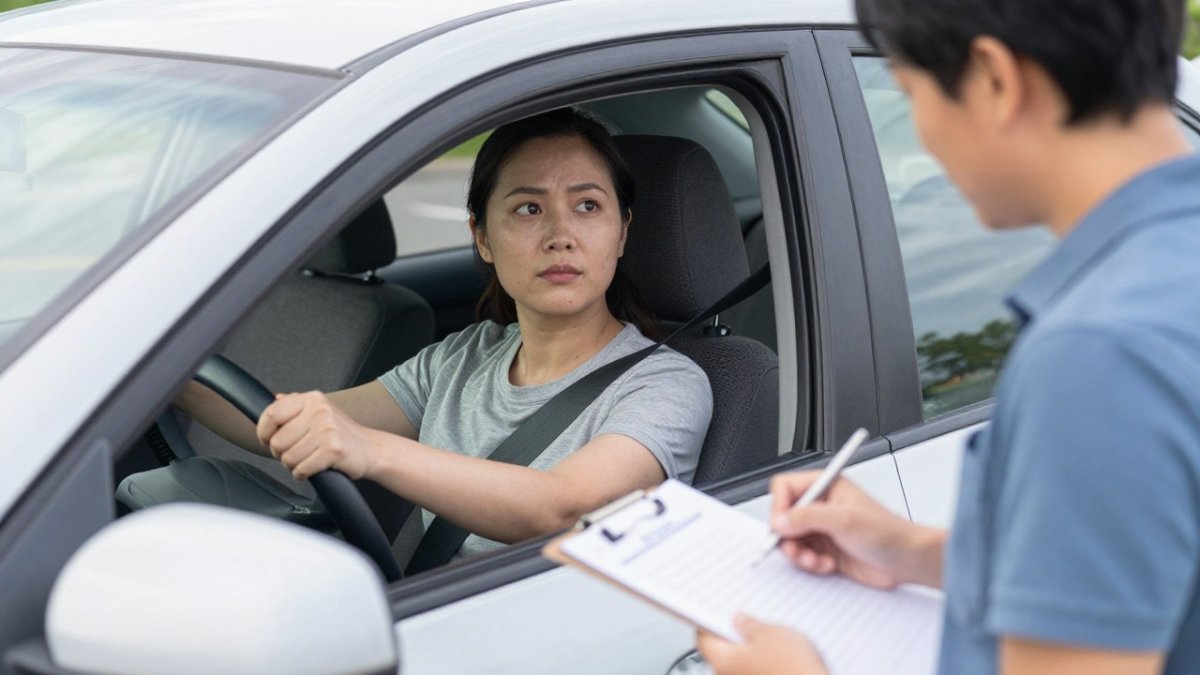
Here is what most first lessons cover:
- Starting and stopping smoothly so the car moves without jerking.
- Steering control through gentle turns and straight lines.
- Braking with steady pressure instead of sudden stops.
- Basic awareness of your surroundings, including checking mirrors.
Common mistakes at this stage are easy to fix. Many beginners grip the wheel too tightly or press the accelerator too hard. Others forget to check their mirrors. Your instructor will point these out calmly. Expect corrections, and treat them as normal learning.
A common mistake is trying to memorize everything in one lesson. Focus on one or two skills at a time. The rest will come with practice.
How Driver Training Progresses Over Weeks
Progress is not measured by how many weeks you have logged, it is measured by demonstrated skill. Most programs use a combination of instructor observation, a skills checklist, and sometimes a written or digital log to decide when you are ready for more complex traffic. Here is how that typically works and what the benchmarks look like.
How instructors assess readiness
A common pattern is a skills matrix: the instructor marks each skill (starting, stopping, steering, lane position, mirror checks, signaling, intersection scanning, parking) as introduced, practiced, or proficient. You move from quiet streets to moderate traffic when basic control is consistent, not perfect, but reliable enough that you are not a hazard. Highway driving usually comes only after you can manage lane changes and merging on lower-speed roads.
A realistic progression
- Lessons 1-2: Vehicle setup, starting, stopping, low-speed turns in a parking lot or quiet block.
- Lessons 3-4: Lane position, mirror checks, signaling, and simple intersections on low-traffic streets.
- Lessons 5-6: Moderate traffic, multi-lane roads, left turns at signals, and basic parking.
- Lessons 7+: Highway merging, lane changes at speed, and test-route practice if you are preparing for the state skills test.
This is a general pattern, not a rule. Some learners need more time on basics; others advance faster. The instructor's checklist, not the calendar, drives the decision.
What feedback looks like
Expect verbal feedback during the lesson and a short summary at the end. Many schools give a written or app-based progress report after each session. Ask to see it, it is your best tool for knowing what to practice between lessons. If your school does not provide one, keep your own note after each lesson: one thing you did well and one thing to improve. Tracking these personal milestones ensures you remain focused on the core competencies taught at M&A Drive School as you progress through Structured Driving Lessons for Beginners: A Step-by-Step Guide.
When you are ready for the state skills test
Readiness is usually judged by consistency across a mock test route: smooth starts and stops, correct mirror and signal use, proper lane position, and safe intersection decisions. Your state motor vehicle agency sets the actual test criteria, so confirm the current checklist with them.
Watch out: Do not confuse hours logged with readiness. Some states require a minimum number of supervised practice hours before the test, but meeting the hour count does not mean you have the skill, the instructor's assessment and the state's criteria both matter.
Delivery Driver Training: What Changes for Work Vehicles
If you plan to drive for work, some training details change. Delivery vans are larger and heavier than typical passenger cars, so they handle differently. Turning radius, blind spots, and braking distance all need more attention.
Expect extra focus on:
- Wider turns and judging the rear of the vehicle
- Loading and unloading safely at stops
- Working in traffic while making frequent stops
- Following company procedures for safety and routing
If you are weighing a career in delivery driving, research what full-time roles involve before you apply.
Watch out: Do not assume a passenger-car license prepares you for a large van. Ask your employer what training they provide before your first shift.
Booking Your Next Session and Starting Your Training
Once your first lesson is done, book the next one while the experience is fresh. Momentum helps. Waiting weeks between lessons makes skills fade and nerves return.
When you choose a program, compare these details:
- Lesson length and how many sessions are included
- Whether practice vehicles are provided
- What happens if you miss a lesson
- How progress is measured and reviewed
If you are ready to take the next step, visit 323 Logistics Solutions, LLC for current information and next steps. The company offers paid training, a team-first environment, and opportunities for advancement.
Frequently Asked Questions
What is the hardest part of driver training?
For most new drivers the hardest part is managing nerves and multitasking, not the basic controls. Steering, braking and accelerating feel awkward at first, but they become routine within a few sessions. Judging gaps at intersections, checking mirrors in sequence and keeping track of signs and pedestrians at the same time usually takes the longest to develop. Short, regular practice between lessons helps most with that multitasking, and instructors typically build complexity gradually so you are not overloaded early on.
What should I bring to my first driver training session?
Bring a valid learner's permit or the documents your state requires, along with any payment method your driving school accepts and a pair of comfortable shoes with flat, closed soles. Wear clothing you can move in and avoid bulky sunglasses that block peripheral vision. If you wear glasses or contact lenses, bring them, since many licenses require corrective lenses. Arriving a few minutes early gives you time to check in before the lesson starts.
Will I drive on the road during my first training session?
Most first sessions take place in a quiet parking lot or low-traffic area so you can practice starting, stopping, steering and using the mirrors before facing real traffic. Once you are comfortable with the controls, instructors usually move to residential streets and then busier roads. The pace depends on your progress, and a good instructor will not push you onto a road you are not ready for.
Do I need driving experience before starting delivery driver training?
No prior driving experience is required for most delivery driver training programs, but you do need a valid driver's license and a clean driving record that meets the employer's standards. 323 Logistics Solutions, LLC offers paid training for new drivers.