 How-to
How to Transition to Professional Driving
Last Updated: November 22, 2026
Quick Summary
Transitioning to professional driving means getting a valid license, a clean driving record and any required commercial credentials for your target role, then completing hands-on training. Most roles start with a standard license, while heavier vehicles need a commercial driver's license (CDL).
- Confirm the exact license class your target role requires before you enroll in training.
- Check your driving record early, since serious violations can rule you out of many roles.
- Hold a CDL learner's permit for at least 14 days before taking the skills test.
- Choose a training program that offers real behind-the-wheel hours and job placement help.
- Ask every employer about pay, benefits and paid training in writing before accepting an offer.
Table of Contents
- Understanding What Professional Driving Involves
- Meeting Professional Driver Qualifications
- Building a Clean Driving Record and Background
- Completing Professional Driver Training
- Landing Your First Entry-Level Driving Jobs
- Finding Delivery Driver Jobs With Benefits
- Your Next Step Toward a Professional Driving Career
- Frequently Asked Questions
Understanding What Professional Driving Involves
Professional driving means getting paid to operate a vehicle as the main part of your job. It covers delivery routes, local hauling, passenger transport and long-haul trucking. The work is physical, schedule-driven and held to strict safety standards. Many people make the switch from a desk, a service job or gig driving, and the path is more manageable than it first looks.
Professional driving is a job where safe, reliable driving is the core skill. Employers judge you on punctuality, vehicle care and how you handle customers and traffic. That focus is why training and a clean record matter so much.
Before you apply anywhere, be clear on what the day looks like. Delivery drivers typically load a vehicle, follow a route and complete a set of stops. Check that the schedule fits your life before you accept a role.
Common Professional Driving Roles
- Last-mile delivery drivers deliver packages to homes and businesses in one area.
- Local and regional drivers haul freight within a state or a short distance.
- Passenger transport drivers move riders on buses, shuttles or charter routes.
- Long-haul truck drivers spend nights away from home on interstate routes.
Each role has different licensing needs. Delivery work often starts with a standard driver's license, while heavier vehicles require a commercial driver's license (CDL).
Who Makes a Strong Candidate
Strong candidates tend to share a few traits:
- A steady temperament under traffic and time pressure
- Comfort with physical work, including lifting and walking
- Reliability with start times and attendance
- A willingness to learn route tools and safety procedures
Being new to logistics is not a barrier. Many employers train people who bring good habits and a clean attitude.
Meeting Professional Driver Qualifications
Most professional driving jobs share a basic floor of requirements, but the credentials above that floor depend heavily on what you drive and who you drive for. Treat this as a role-by-role map rather than a single checklist, because the fastest way to waste money is to train for the wrong license class.
The universal floor (every paid driving role):
- A valid state driver's license in good standing
- A driving record that passes an employer review (typically the last 3-5 years)
- A background check, which most employers run through a consumer reporting agency under the Fair Credit Reporting Act
- A drug screen, and for safety-sensitive commercial roles, participation in the FMCSA Drug and Alcohol Clearinghouse
- The ability to read and speak English well enough to follow route instructions and talk with enforcement
Requirements by Role
Last-mile and local delivery (vans, box trucks under 26,001 lbs GVWR): A standard license is usually enough. Employers set their own minimum age, 21 is common for insurance reasons, but some hire at 18 for non-CDL vans. Expect a motor vehicle record (MVR) pull, a background check, and sometimes a road test in the company vehicle. No DOT medical card is required unless the vehicle crosses into CDL territory.
Passenger transport (shuttles, charters, buses): This is where state rules diverge sharply. Passenger transport licensing varies by state and by vehicle size, so confirm the endorsements and medical requirements with the licensing agency and the employer.
Commercial trucking (CDL required): Commercial license classes and endorsements depend on the vehicle and the cargo, so confirm the exact class your target role requires with your state licensing agency.
The CDL path itself has fixed federal steps: obtain a commercial learner's permit (CLP) after passing the general knowledge test, hold the CLP for at least 14 days before skills testing, complete entry-level driver training (ELDT) from a registered provider if you are getting your first CDL or adding a hazardous materials endorsement, then pass the three-part skills test (pre-trip inspection, basic controls, road driving). The FMCSA sets these rules; your state licensing agency administers them.
Medical, Background, and Ongoing Compliance
Keep your DOT medical certification current, since an expired card can keep you off the road.
Background checks often go beyond driving records, and the scope depends on the role. Confirm with the employer what checks apply to the position you are considering.
Ongoing compliance continues after hire, and a pattern of violations or a serious offense can affect your driving record. Review the current rules with your state licensing agency.
Watch out: requirements vary by state and by employer, so confirm the exact license class, endorsements, and medical card your target job needs before you enroll in any training program.
The table below summarises the key requirements by role, using the details covered in this section.
| Role | Typical license need | Key note |
|---|---|---|
| Last-mile and local delivery (under 26,001 lbs GVWR) | Standard driver's license | Employers set minimum age; 21 is common |
| Passenger transport | Varies by state and vehicle size | Confirm endorsements and medical rules |
| Commercial trucking | Commercial driver's license (CDL) | Confirm class with state licensing agency |
| CDL learner's permit | Hold at least 14 days before skills test | Set by FMCSA; state administers |
| Motor vehicle record review | Typically last 3-5 years | Standard for employer review |
Building a Clean Driving Record and Background
Employers review your driving record carefully. A few serious violations can rule you out, while a single minor ticket often does not.
Watch out: a recent DUI or a pattern of reckless driving tickets can disqualify you from many commercial roles. Check your record before you apply, and address problems early.
Here is what most employers look at:
- Major violations such as DUI, reckless driving or leaving the scene
- Patterns of speeding or at-fault accidents over the past several years
- Suspended or revoked licenses
- Criminal history that touches on theft, violence or drugs
You can request a copy of your driving record from the Pennsylvania Department of Transportation. Reviewing it yourself lets you explain any issues honestly during an interview. Honesty about past mistakes earns more trust than trying to hide them.
Completing Professional Driver Training
Training builds the skills employers want: safe vehicle control, pre-trip inspections, route planning and customer handling. Formal training can shorten your learning curve and help you pass a commercial exam.
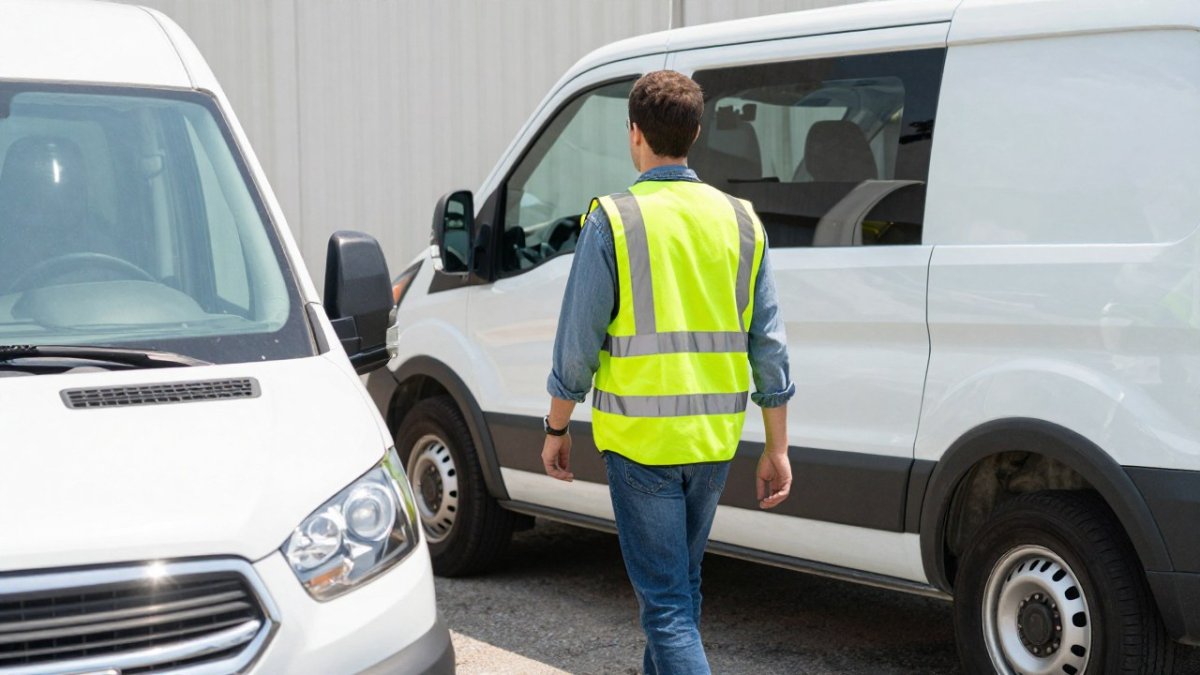
!A new driver in a high-visibility vest doing a walk-around vehicle inspection beside a parked delivery van in a bright daytime lot
Choosing a Training Program
When you compare a CDL training school or driver course, look at these points:
- Accreditation and reputation: Check reviews and confirm the school is licensed in Pennsylvania.
- Hands-on driving hours: Ask how many hours you spend behind the wheel, not just in class.
- Pass rates: Ask for the school's most recent written and skills test results.
- Job placement help: Find out whether the school connects graduates with employers.
- Schedule fit: Choose day, evening or weekend options that match your life.
Avoid any program that promises a guaranteed job or pushes you to pay before you understand the terms. Ask for everything in writing.
Training Costs, Funding, and Timelines
Costs vary by program, training length and license class, so check each school's current fees directly before you enroll. Ask what is included, such as testing fees, learner's permit costs and study materials.
Timelines also differ. Some short driver courses take a few weeks, while full CDL programs can run several weeks or more. Ask how long the program takes from enrollment to a completed skills test.
Funding options may include:
- Employer-sponsored training, where the company pays or reimburses costs
- Workforce programs through the Pennsylvania CareerLink system
- Grants or financial aid for eligible students
Ask employers whether they offer paid training before you pay out of pocket.
Landing Your First Entry-Level Driving Jobs
Your first job sets the tone for your career, so prepare before you apply. A few steps help you stand out.
- Update your resume to highlight reliability, customer contact and any driving experience.
- List your clean record and certifications near the top of your resume.
- Prepare for a practical road test and be ready to explain your safety habits.
- Research the company so you can speak to its operations during the interview.
In interviews, employers often ask how you handle delays, difficult customers and schedule changes. Give specific examples from past jobs. Show that you can stay calm and keep your schedule on track.
For a more detailed walkthrough of first-week habits, our guide on 7 Tips for New Delivery Drivers to Succeed covers the routines that help new drivers build confidence quickly.
Finding Delivery Driver Jobs With Benefits
Many entry-level delivery roles now include benefits, but terms differ by employer. When you compare offers, ask about the full package, not just the hourly rate.
Questions to ask before you accept an offer:
- When do benefits begin, and do they start on day one or after a waiting period?
- Does the plan include health, dental and vision coverage?
- Is paid time off available, and how does it accrue?
- How is training paid, and is it offered before you start driving?
- Are schedules consistent, and how far in advance are shifts posted?
Get the answers in writing. A written benefits summary protects you if the offer later changes.
At 323 Logistics Solutions, LLC, we are an Amazon Delivery Service Partner in the State College, Pennsylvania area. We offer competitive hourly pay, benefits, paid training and clear room to advance, so drivers can build a long-term career. Review our current openings and benefit details directly with our team to see whether the fit is right for you.
Your Next Step Toward a Professional Driving Career
Start by checking your driving record and confirming which license your target job requires. Then choose a training program that offers real behind-the-wheel practice, and ask every employer about pay, benefits and advancement in writing.
Ready to take the next step? Apply now with 323 Logistics Solutions, LLC and start a driving career built on paid training and a team that looks after its drivers.
Frequently Asked Questions
What are the steps to becoming a professional driver?
Most people follow the same sequence: confirm you meet the age and license requirements, check your driving record, complete formal training or a supervised driving course, pass any required written and road tests, and then apply for jobs. Employers often look for a valid driver's license, a clean recent record, and proof of completed training. If you plan to drive a heavier vehicle, a commercial driver's license may be required, so confirm the requirements for the exact role before you apply.
Do you need a commercial driver's license to become a professional driver?
Not always. Many professional driving roles, including some delivery positions, use a standard driver's license, while larger trucks and certain passenger vehicles require a commercial driver's license (CDL) in the United States. Licensing rules are set at the state level, so check the requirements for the specific vehicle class and job. Ask any employer which license class the role needs before you start training.
How long does it take to train for a professional driving job?
Training length depends on the role and the program. Short driver education courses can take a few weeks, while full commercial training may take several weeks of classroom and behind-the-wheel practice. Add time for permit processing and testing. Realistic timelines vary, so ask any training provider for a written schedule before you enroll.
How can I build a safe driving record before applying for a driving job?
Avoid moving violations and at-fault accidents, keep your license current, and complete a defensive driving course if your state or an employer offers one. Employers review motor vehicle records, so a clean history over the past few years strengthens your application. If you have past violations, be ready to explain them honestly during the interview.